Noise vs Signal: Filtering the Financial Firehose
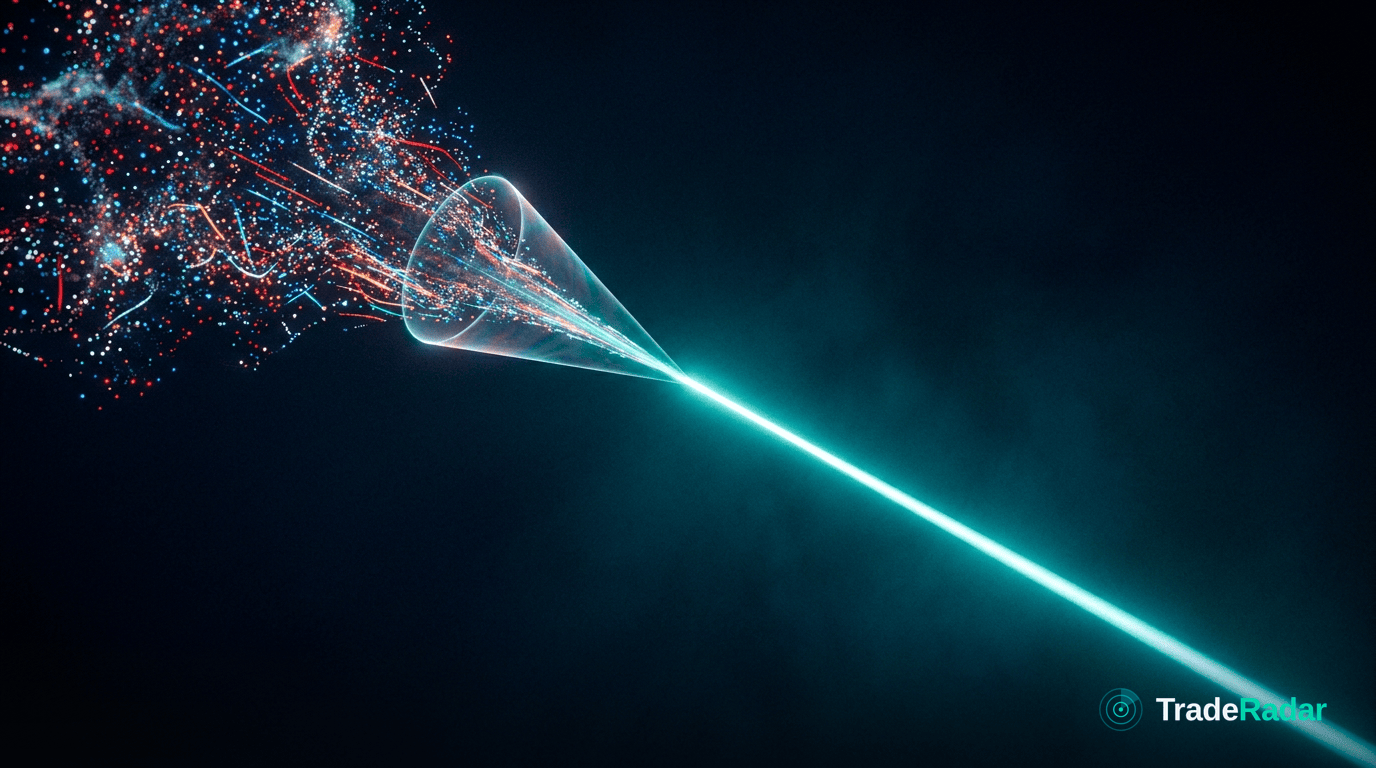
The market doesn't lack information — it drowns you in it. Headlines, alerts, prints, hot takes, ticks: almost all of it is noise, and reacting to noise is the fastest way to trade badly. Signal is the small fraction that changes a driver. Everything else is motion. Here's how to filter.
The problem isn't too little information — it's too much
A generation ago, the edge was access: getting the data at all. Today the data is free, infinite, and pointed at you like a firehose. The edge has flipped. Now the scarce skill is filtering — deciding what to ignore.
That's counterintuitive. It feels responsible to watch everything, read every headline, take every alert. But attention is finite, and every scrap of noise you process crowds out the signal you actually needed. More inputs don't make a better decision. Past a point, they make a worse one, because they bury the few things that matter under thousands that don't.
The goal isn't to consume more. It's to consume less, better.
Signal has a definition: does it change a driver?
Vague advice like "focus on what matters" is useless without a test. Here's a workable one:
Signal is information that changes a driver of a market you care about. Everything else is noise.
Run any input through that filter:
- A central bank shifts its stance on rates → that changes a driver. Signal.
- A pundit predicts a crash for the ninth time this year → changes nothing about any driver. Noise.
- Inventories come in far from expectations → changes the supply picture. Signal.
- Price ticked up and down twelve times in the last hour → the driver is unchanged; that's just the market breathing. Noise.
Most of what fills a trading screen fails the test. That's not a problem to fix — it's the normal ratio. Accepting that most information is noise is the beginning of filtering it.
Three filters that do most of the work
You don't need a complicated system. Three questions handle the bulk:
- Relevance — is this a driver of something I trade? If it doesn't touch a market you care about, it's noise for you, however important it is elsewhere.
- Magnitude — is it big enough to matter? A number that lands near expectations changes little, even on a "high impact" event. The surprise is what counts, not the occurrence.
- Novelty — is this actually new? Markets price in known things. A "shock" everyone saw coming is already in the price. The signal is the part that wasn't expected.
Anything that fails all three can be dismissed on sight. Anything that passes deserves your attention. This alone quiets most of the firehose.
Price movement is often the loudest noise
Here's the trap that catches disciplined people: they filter their news feed carefully, then let raw price action scream at them unfiltered. But short-term price is one of the noisiest inputs there is.
A market can move meaningfully on nothing — thin liquidity, forced flows, someone's stop cascade — with no change to any driver at all. If you treat every wiggle as a message, you'll invent stories to explain moves that mean nothing, and you'll get chopped to pieces reacting to them.
The discipline is to ask of a move what you ask of a headline: did a driver change, or is this just motion? Often it's motion. Motion is not a signal.
Reacting vs responding
Noise pulls you into reacting — twitching at every input, always a beat behind. Signal lets you respond — acting on the few things that genuinely shift the picture.
The difference shows up in behaviour:
- A reactor checks constantly, feels every headline as urgent, and trades far more than their edge justifies.
- A responder knows what they're watching for, ignores the rest on purpose, and acts when a driver actually moves.
Overtrading is very often a noise problem in disguise. When every flicker feels like a call to action, you act constantly — and most of those actions were the noise winning.
The honest trade-off
Filtering hard means you will sometimes miss things, and you'll occasionally ignore an input that turns out to matter. That's the real cost, and it's uncomfortable — the fear of missing out is exactly what keeps people over-consuming.
But the alternative is worse. Trying to catch everything guarantees you drown, react to junk, and lose the signal in the flood. A filter that occasionally misses beats a firehose that always overwhelms. You can't act well on information you can't hear over the noise.
TradeRadar is a filter by design: it surfaces what changes a driver and why it matters now, so the signal isn't buried under the feed. Less firehose, more decision.
TradeRadar is decision-support software, not investment advice. Trading involves risk, and no approach removes it.
Frequently asked
What is the difference between noise and signal in markets?
Signal is information that changes a driver of a market you care about; noise is everything else. Most headlines, alerts, and short-term price ticks are noise because they don't actually change what's moving the market.
How do I filter out market noise?
Run each input through three questions: is it relevant to something I trade, is it big enough to matter versus expectations, and is it genuinely new? Anything that fails all three can be ignored.
Is price action noise or signal?
Both — but short-term price is often the loudest noise. Markets move on flows and thin liquidity without any driver changing, so ask of a move what you'd ask of a headline: did a driver change, or is this just motion?
Why does too much information hurt trading?
Attention is finite. Every piece of noise you process crowds out the signal you needed, and constant inputs push you into reacting rather than responding — a common hidden cause of overtrading.
Related in The Bigger Picture

A Good Setup With No Reason Is a Gamble
A clean setup with no reason behind it is a gamble in disguise. Here's the difference between a trade setup and a thesis — and why the thesis is the edge.
Charts vs Context: What Price Alone Can't Tell You
Technical analysis shows what price did, not why. Here are the real limitations of charts alone — and the context that turns a pattern into a decision.

Confirmation vs Invalidation: Know What Breaks Your Trade
Confirmation feels good; invalidation keeps you solvent. Learn to define what would prove a trade wrong before you enter — and exit on evidence, not hope.